Some Successful Companies Reduce Decision Fatigue
Over the past four years, my co-host Poy and I have explored more than 100 business cases on our podcast, Turn Lemons Into Lemonade. One of the biggest surprises has been discovering how often completely unrelated companies arrive at the same business principle.
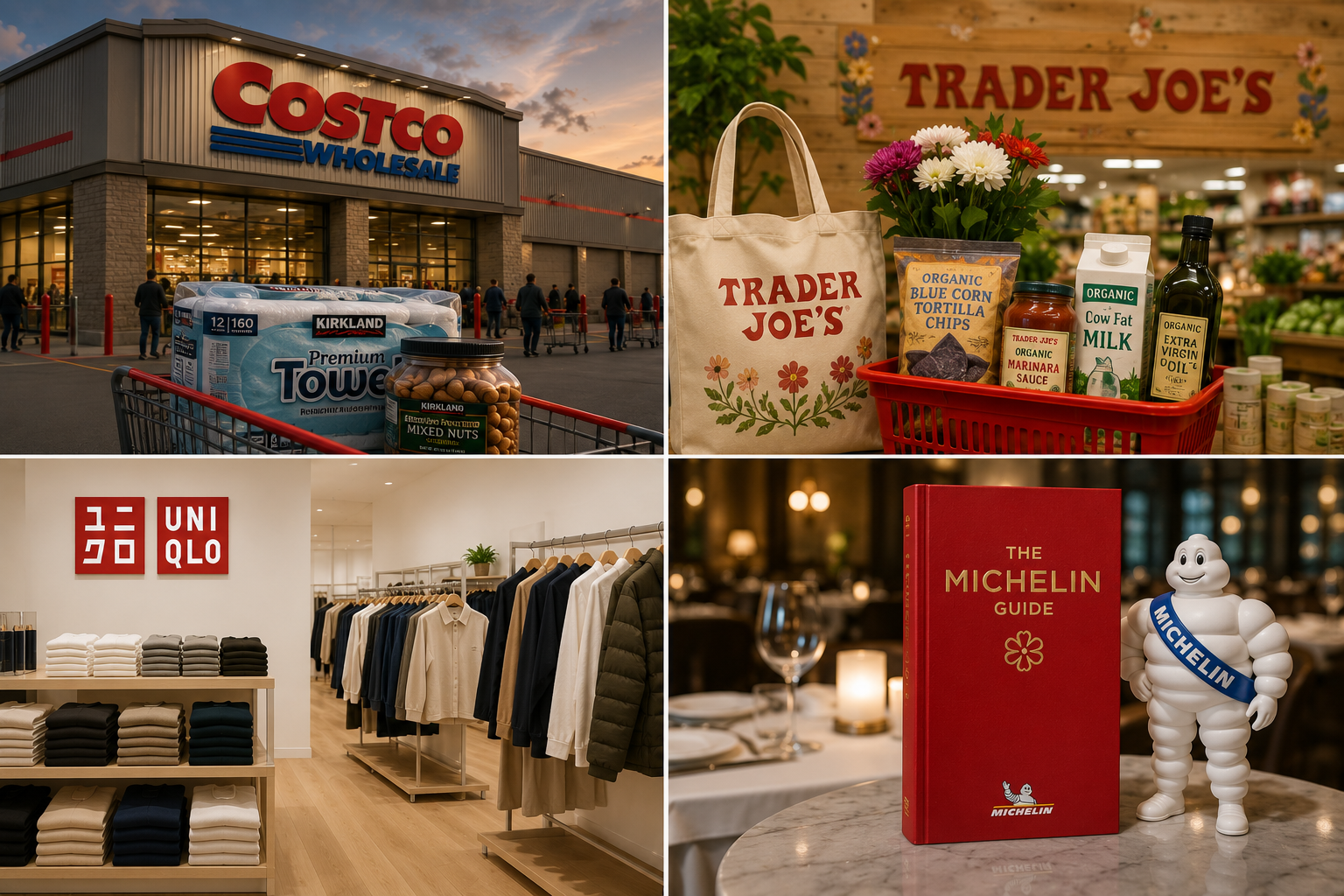
Today's four companies from the Lemonade podcast library are Costco, Trader Joe's, Uniqlo, and the Michelin Guide.
One is a warehouse retailer. One is a grocery chain. One is a global apparel brand. One doesn't sell products at all—it rates restaurants. At first glance, they have nothing in common. Yet I believe they all compete in exactly the same way. They reduce decision fatigue!
For years, businesses have operated under one assumption: customers want more choices. More products. More features. More colours. More options. But what if the opposite is true? What if the real value isn't giving customers more choices, but helping them make fewer decisions?
Costco is perhaps the best example. Walk into a typical supermarket and you may find dozens of brands of ketchup, hundreds of breakfast cereals, and countless variations of almost every product imaginable. Costco intentionally does the opposite. It carries only a fraction of the SKUs found in traditional retailers, carefully selecting the products it believes offer the best value. Customers don't feel restricted. Instead, they feel relieved. They trust that Costco has already done the hard work of evaluating quality and price on their behalf.
In other words, Costco isn't just selling products. It's selling confidence.
Trader Joe's also follows this similar philosophy. One of the reasons customers love Trader Joe's is because it has already made many of the decisions for them. Nearly 90% of its products are private label, eliminating the endless comparisons that dominate most grocery stores. Instead of asking customers to choose among ten nearly identical olive oils or pasta sauces, Trader Joe's offers a carefully curated selection. Shopping becomes simpler, faster, and surprisingly more enjoyable.
Then there's Uniqlo. The fashion industry constantly encourages consumers to chase the latest trend. Every season brings new collections, new colours, and new "must-have" items. Uniqlo chose a completely different path. Rather than overwhelming customers with fast-changing fashion, it built its reputation on timeless essentials—well-designed basics that people can wear year after year. During our podcast, I described Uniqlo as "the stabilizer in your wardrobe." Instead of asking, "What's fashionable this season?" Uniqlo asks a more enduring question: "What will still deserve a place in your wardrobe five years from now?" That shift removes uncertainty and simplifies everyday decisions.
The Michelin Guide may seem like the most unusual example on this list. After all, Michelin doesn't operate restaurants. It simply evaluates them. But that's precisely why it belongs here.
Imagine arriving in a city with thousands of restaurants. Where do you begin? Michelin has already done the research, applied consistent standards, and narrowed the field. It doesn't eliminate choice; it makes choice easier. What Michelin really sells isn't restaurant recommendations. Instead, it's trust.
Looking at these four companies together, I realized that they are all solving the same problem, but it has very little to do with the products they sell. Instead, they are addressing one of the defining challenges of modern life: decision fatigue.
We live in an age where information has never been more accessible, yet making good decisions has never felt more difficult. Every day we are confronted with an overwhelming number of products, opinions, recommendations, reviews, and alternatives. Rather than empowering us, this abundance often creates uncertainty, consumes our attention, and makes even simple choices feel unnecessarily complicated.
So when leaders think about improving our products or services, perhaps they need to ask themselves this question: What decision can we remove for our customers?
In an age of unlimited options, the businesses that win won't necessarily be those with the biggest catalog. They also could be the ones that make life feel a little simpler.
许多成功企业,是在帮助顾客减少决策疲劳
过去四年,我和Poy 在《柠檬变成柠檬水》播客中分析了110多个商业案例。从奢侈品牌、科技公司,到餐饮、体育、消费品和娱乐产业,我们越来越发现一个有趣的现象:许多来自完全不同产业的优秀企业,最终都遵循着相同的商业规律。
今天,我们想从过去节目中挑选四个案例:Costco、Trader Joe's、优衣库(Uniqlo)和米其林指南(Michelin Guide)。初看它们几乎毫无关联。一个是会员制仓储零售商,一个是美国连锁超市,一个是全球服饰品牌,而最后一个甚至根本不卖任何产品,它只是评价餐厅。
然而,在我看来,它们真正的竞争优势,却来自同一件事情 - 它们都在帮助消费者减少决策疲劳(Decision Fatigue)。长期以来,商业世界一直有一个根深蒂固的假设:消费者希望拥有更多选择 - 更多产品。更多功能。更多颜色。更多规格。更多品牌。但如果事实正好相反呢?如果企业真正创造价值的方式,并不是提供更多选择,而是帮助消费者做出更少、更容易的决定呢?
Costco 或许是最典型的例子。走进一家普通超市,你可能会看到几十种番茄酱、上百种早餐麦片,以及数不清的同类商品。而 Costco 却反其道而行。它主动减少商品种类,只保留少量经过精心挑选的 SKU,把最有价值、最值得购买的商品留给消费者。消费者并不会因此觉得选择受到限制,反而感到轻松。因为他们相信,Costco 已经替他们完成了最困难的工作 - 比较品质、评估价格、筛选产品。所以,Costco 卖的不只是商品。它卖的是一种放心购物的信任感。
Trader Joe's 采用了几乎相同的逻辑。很多消费者喜欢 Trader Joe's,并不是因为它的商品特别多,而是因为它已经替消费者做好了很多决定。店里接近90%的商品都是自有品牌,消费者不用在十几种橄榄油、几十种意大利面酱之间反复比较,只需要从一小部分经过精选的商品中做出选择即可。这种经过筛选后的购物体验,不仅让购物速度更快,也让整个过程变得更加轻松、愉快。
优衣库同样如此。时尚行业不断鼓励消费者追逐最新流行,每一个季度都有新的颜色、新的设计、新的"必买单品"。而优衣库却选择了一条完全不同的道路。它不追逐短暂的流行,而是坚持打造经典、耐穿的基础款。在我们的播客里,我曾经形容优衣库是**"衣柜里的稳定器"**。它并不会问消费者:"今年最流行什么?"它真正思考的是:"五年以后,这件衣服还值得留在你的衣柜里吗?"正因为如此,消费者每天面对衣柜时,也少了一份犹豫,多了一份确定。
《米其林指南》或许是这四家公司中最特别的一个案例。它自己并不开餐厅。它只是评价餐厅。但也正因为如此,它更能体现今天要讨论的商业规律。想象一下,当你第一次来到一个拥有几千家餐厅的城市时,你会如何选择?《米其林指南》早已替你完成了大量工作:制定统一标准、实地评估、层层筛选,最后把真正值得推荐的餐厅呈现在你的面前。它并没有消除选择。它只是让选择变得更容易。因此,《米其林指南》真正出售的,并不是餐厅推荐,也是信任。
把这四家公司放在一起之后,你会发觉它们真正解决的问题,与产品本身其实关系并不大。它们共同面对的,是现代社会越来越普遍的一种现象 - 决策疲劳。
今天,我们生活在一个信息前所未有丰富的时代。各种产品、评价、推荐、排行榜、社交媒体意见和AI建议,几乎无时无刻不围绕着我们。照理说,信息越多,我们应该越容易做出正确的决定。但现实却恰恰相反。过多的信息,并没有让我们变得更轻松,反而让我们越来越犹豫、越来越焦虑,也越来越害怕做出错误的选择。
因此,我越来越觉得,未来企业竞争的重点,不一定是谁拥有最多产品、最多功能,或者最大的产品目录。真正优秀的企业,越来越像一位值得信赖的编辑。它们并不是不断增加选择,而是帮助消费者过滤复杂的信息,减少不必要的思考,把真正值得关注的内容呈现出来。
所以,当企业领导者思考如何改善自己的产品和服务时,也许真正应该问自己的,并不是"我们还能增加什么?"而是"我们还能替客户减少哪一个决定?"
在这个选择无限、信息爆炸的时代,真正赢得竞争优势的企业,未必是提供最多选择的企业。它们更有可能是那些让生活变得更简单一点、让决策变得更轻松一点的企业。