柠檬水洞察:为什么一些伟大的创新,就是在重新定义一个旧行业?
在过去四年里我和Poy制作了110多期播客,在这个过程中,我们研究了100多个商业案例。从奢侈品牌到科技公司,从餐饮、能源,消费品,体育到娱乐产业,我越来越发现,很多看似毫不相关的公司,其实都在做同一件事。
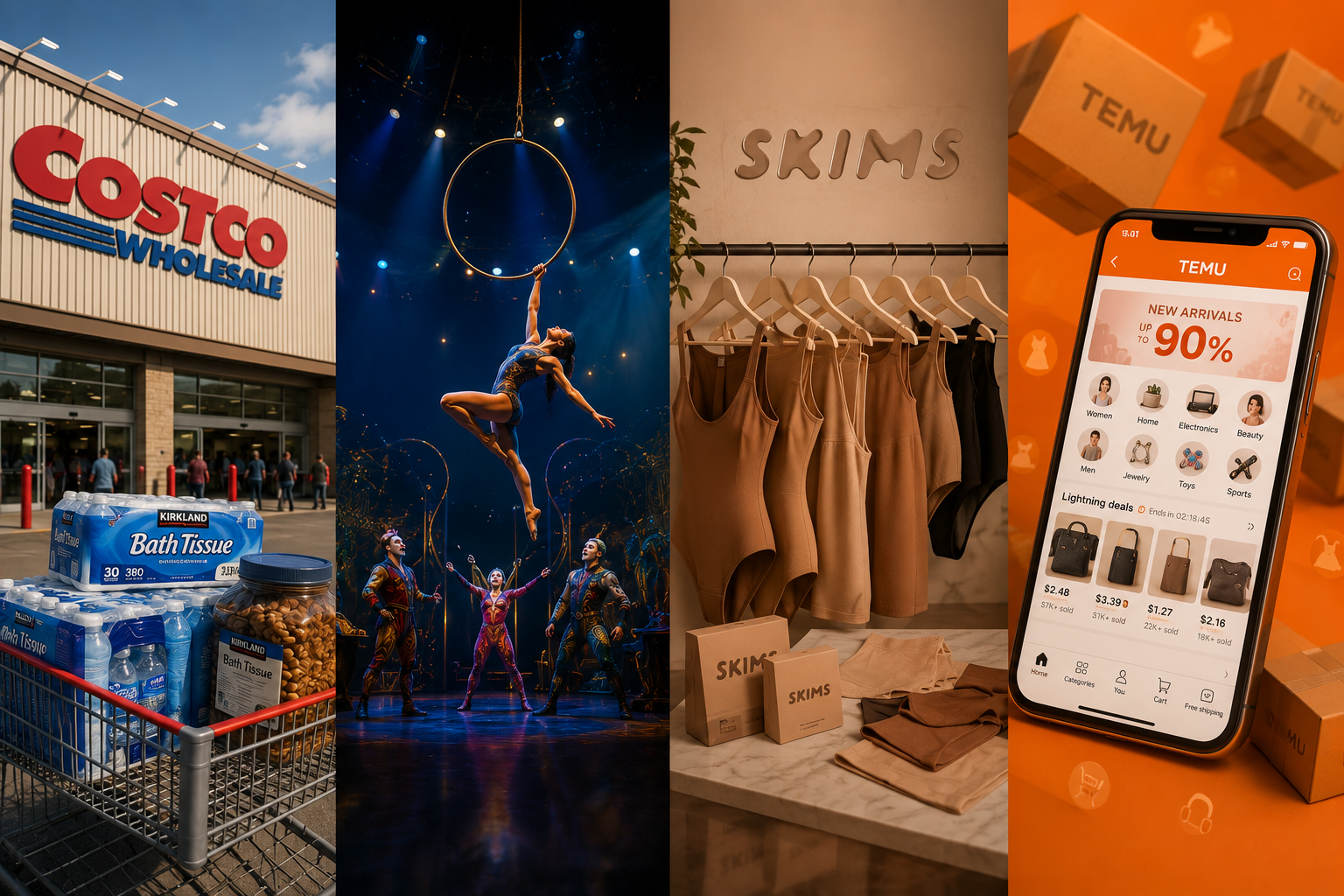
今天来说以下四个完全属于不同世界的品牌:Costco,太阳马戏团、SKIMS 和 Temu。
很多人以为,商业创新就是发明一个全新的产品、创造一项全新的技术,或者进入一个从未存在过的市场。但在做了100多集播客之后,我觉得真正改变一个行业的企业,往往都不是因为"发明"了什么,而是因为重新定义了大家早已习以为常的东西。
Costco 并没有发明超市,也没有发明会员制度。但它重新定义了零售商赚钱的方式。大多数零售商都希望提高商品利润,而 Costco 却主动限制商品毛利,把利润建立在会员费和长期信任之上。它甚至坚持精简 SKU,让消费者不用面对无数选择,而是相信 Costco 已经替他们做了筛选。慢慢地我们去 Costco,不只是为了买东西,而是因为相信"这里不会卖贵,也不会卖差"。所以它改变的,不是超市这个商业模式,而是消费者与零售商之间的关系。
太阳马戏团的故事同样如此。过去,马戏团在人们心中往往代表动物表演、家庭娱乐和儿童观众。但太阳马戏团并没有努力把传统马戏做得更精彩,而是重新思考这么一个问题:"为什么马戏只能做成是这样的?" 于是,它大胆地把戏剧、音乐、舞蹈、舞台设计和杂技融合在一起,让成年人也愿意花几百美元买一张门票。所以他们不是简单地在经营一家马戏团,而是在重新定义一个品牌能够成为什么。
SKIMS 的成功,也不是因为 Kim Kardashian 发明了塑身衣。事实上,塑身衣已经存在很多年了。但过去,它总让人联想到遮盖缺陷、修饰身材,甚至带有一点羞于启齿的意味。SKIMS 做的事情却完全不同。它把塑身衣变成一种日常基础服饰,同时强调不同肤色、不同身材、不同年龄的人都值得被看见。它卖的不只是产品,而是一种更包容、更现代的身体观念。因此消费者购买的不只是衣服,更是一种新的价值认同。
最后看看Temu 。过去,大多数电商平台都希望帮助消费者更快、更精准地找到自己需要的商品。但 Temu 却反其道而行。它不仅利用极致低价吸引消费者,更把购物过程设计得像"寻宝游戏"一样,充满惊喜、推荐和不断刷新的发现感。很多人打开 Temu,并不是因为今天一定要买什么,而是想看看今天又会发现什么。这种模式改变的让购物从一种交易行为,变成了一种娱乐体验。
因此总结以下这四家公司,它们最大的共同点,并不是拥有别人没有的技术,也不是投入了别人无法匹敌的资金,而是都敢于重新回答一个行业里最基本的问题。例如:
零售一定要靠商品赚钱吗?
马戏一定只能给小朋友看吗?
塑身衣一定是为了遮盖身材吗?
电商一定只是为了提高购物效率吗?
真正伟大的创新,往往不是创造一个全新的世界,而是勇敢地质疑那些大家认为理所当然的规则。因此,也许这就是商业世界里最有价值的一种创新。不是创造新的答案,而是重新提出问题。
Four Companies That Have Nothing in Common… Yet They Are All Doing the Same Thing
Over the past four years, my co-host Poy and I have produced more than 110 episodes of our podcast, Turn Lemons Into Lemonade. Along the way, we've explored over 100 business cases, from luxury brands and technology companies to restaurants, energy firms, consumer products, sports, and entertainment.
One pattern keeps appearing. Many of the world's most successful companies, despite operating in completely different industries, are actually doing the same thing.
Today, let's look at four examples: Costco, Cirque du Soleil,SKIMS, and Temu.
At first glance, they couldn't be more different. One is a warehouse retailer, one is a live entertainment company, one is a fashion brand, and the last is an e-commerce platform.
But they all share one important characteristic.
They didn't invent something new. They redefined something familiar.
For many people, innovation means inventing a groundbreaking product, developing a revolutionary technology, or creating an entirely new market. But after studying more than 100 business cases, I've come to believe that the companies that truly transform industries rarely succeed because they invented something no one had ever seen before. Instead, they ask a much more powerful question: "Why does this industry have to work this way?"
Costco didn't invent supermarkets, nor did it invent membership programs. What it redefined was how a retailer makes money. While most retailers focus on maximizing product margins, Costco intentionally keeps margins low and builds its business around membership fees and long-term customer trust. It also limits the number of SKUs, removing the burden of endless choice and replacing it with confidence. Today, many of us don't shop at Costco simply because it's cheaper—we shop there because we trust that Costco has already done the filtering for us. In other words, Costco didn't reinvent retail. It reinvented the relationship between retailers and consumers.
Cirque du Soleil followed a similar path. Traditionally, circuses were associated with animals, children's entertainment, and family outings. Instead of trying to build a better circus, Cirque du Soleil asked a more fundamental question: Why does a circus have to look like this?
The result was a completely different experience. By combining theatre, music, dance, storytelling, and breathtaking acrobatics, Cirque transformed the circus into a premium cultural experience that adults were willing to pay hundreds of dollars to attend. Today, it is no longer simply a circus company—it is a global entertainment brand that continues to redefine what live performance can be.
SKIMS offers another fascinating example. Kim Kardashian didn't invent shapewear. The category had existed for decades. Traditionally, shapewear was marketed as something to hide flaws or "fix" the body. SKIMS completely changed that conversation. It repositioned shapewear as an everyday wardrobe essential while celebrating people of different body types, skin tones, and ages. The company isn't simply selling clothing. It's selling a more inclusive and modern definition of beauty. Customers aren't just buying garments—they're buying into a set of values.
And finally, there's Temu. Most e-commerce platforms compete by helping customers find exactly what they need as quickly and efficiently as possible. Temu took a very different approach. It turned online shopping into something closer to entertainment. Its ultra-low prices, endless recommendations, and constant sense of discovery make the experience feel more like a treasure hunt than a transaction. Many people open the app not because they need to buy something specific, but simply because they're curious about what they'll discover next.
Looking at these four companies together, I realized they all challenged the same type of assumption.
Does retail have to make money primarily from product margins?
Does a circus have to be for children?
Does shapewear have to be about hiding imperfections?
Does e-commerce have to be all about efficiency?
The companies that reshape industries don't necessarily create new answers. They challenge old questions. Perhaps that's the most valuable form of innovation in business - The greatest innovations don't always come from creating new answers. They often begin by asking better questions.