Waiting for Godot:我们这一生,到底在等待什么?
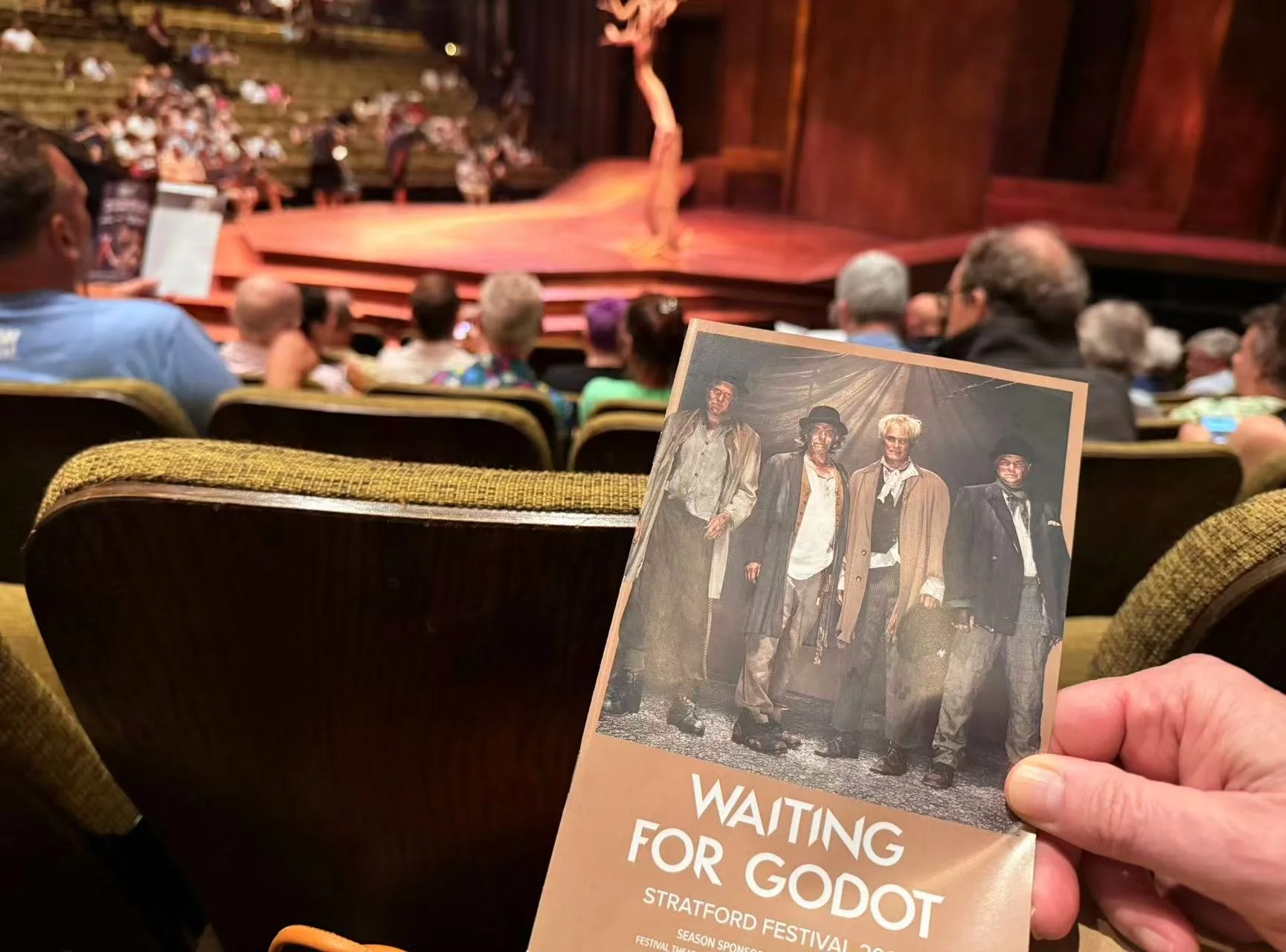
最近看了爱尔兰戏剧家Samuel Beckett(塞缪尔·贝克特)最著名的作品《Waiting for Godot》(《等待戈多》)。说实话,在演出的过程中,我觉得看的挺无聊的。简单的舞台上,从头到尾,两个流浪汉站在一棵几乎没有生命力的树下,聊着一些看似毫无意义的话,重复着昨天说过的话,做着昨天做过的事情。整部戏几乎没有传统意义上的剧情推进,没有悬念,没有高潮,也没有一个我们习惯期待的结局。
可是真正让我意外的是这部戏结束以后,它在我的脑海里却没有真正结束,它可能是我近年来看过最令人深思的一部戏了。那么为什么这样一部节奏缓慢、情节重复,让我觉得有些乏味的作品,却被誉为二十世纪最伟大的戏剧之一?
我想它之所以成为经典,并不是因为戈多是谁,而恰恰是因为戈多始终没有出现。整部戏里,两位主角始终相信:"再等等吧,戈多今天应该会来。"于是,他们一天天等待,一天天重复着同样的对话、同样的动作、同样的希望。一天过去了,戈多没有来;第二天,他们依然继续等待,仿佛只要再坚持一天,人生就会迎来改变。然而,什么都没有发生。真正令人深思的,并不是戈多没有出现,而是他们把生命几乎全部交给了等待。
《等待戈多》也让我重新理解了约翰·列侬的一句话:"当你忙着规划未来的时候,人生已经悄然发生。"随着我年龄越来越大,我越来越觉得,人生真正重要的能力,也许不是等待一个确定的未来,而是能够在充满不确定性的世界里,依然认真地生活。
人生本来就没有所谓"完成"的一天。工作会一直有新的挑战,身体会慢慢老去,家庭关系需要不断经营,世界也永远充满变化。AI正在重塑各行各业,经济环境不断波动,科技每天都在刷新我们的认知。年轻的时候,我们总以为,只要解决了眼前的问题,跨过了这一道坎,生活就会从此风平浪静。后来才慢慢明白,人生不是一场考试,它没有最后一题,也没有一个终点,会有人告诉你:"恭喜你,从今天开始,你终于可以无忧无虑地生活了。"
或许真正成熟的人,并不是终于等到了一个没有烦恼的人生,而是学会了与不确定性共处,学会在不完美、不圆满,甚至充满未知的生活里,依然发现意义,依然感受快乐,依然继续前行。真正的人生,从来不是未来某一天才开始。它一直发生在今天,发生在每一个我们以为并不重要的普通时刻里。
《等待戈多》最后留给我的,并不是一个答案,而是一个问题 - 我们究竟是在为未来努力,还是在用未来逃避今天?这个问题,我想会陪伴我很长一段时间。
Waiting for Godot: What Are We Really Waiting For?
Recently, I had the opportunity to see Waiting for Godot, the most famous play by the Irish playwright Samuel Beckett.
To be honest, I found it rather boring while I was watching it.
On a simple stage, from beginning to end, two tramps stand beneath a tree that is almost lifeless. They talk about things that seem to have no real meaning, repeat the same conversations, and go through the same routines day after day. There is almost no plot in the traditional sense, no suspense, no climax, and certainly none of the satisfying resolution we have come to expect from a story.
Yet what surprised me most was that, although the performance ended, the play never really left me. It stayed with me long after I walked out of the theatre. In fact, it may be one of the most thought-provoking plays I have seen in recent years.
So why has such a slow, repetitive, and at times seemingly uneventful play been regarded as one of the greatest works of twentieth-century theatre?
I don't think it became a classic because of who Godot is. Rather, it became a classic because Godot never arrives.
Throughout the play, the two protagonists keep telling themselves, "Let's wait a little longer. Godot will surely come today." Day after day, they wait. They repeat the same conversations, perform the same routines, and cling to the same hope. One day passes, and Godot doesn't come. The next day, they wait again, believing that if they can just hold on a little longer, their lives will finally change.
But nothing changes.
What makes the play so profound is not that Godot never appears. It is that the two men gradually surrender almost their entire lives to waiting.
Waiting for Godot also gave me a new appreciation for one of John Lennon's most famous quotes: "Life is what happens while you are busy making other plans."
As I've grown older, I've come to believe that perhaps the most important skill in life is not waiting for a certain future to arrive, but learning how to live fully in a world filled with uncertainty.
Life is never truly "finished." There will always be another challenge at work. Our bodies will inevitably age. Relationships require constant care and attention. The world itself never stops changing. AI is reshaping industries, economic uncertainty has become the norm, and technology continues to redefine how we live and work.
When we are young, we tend to believe that once we solve the problem in front of us, once we get through this project, this challenge, this difficult period, life will finally settle down. But over time, we realize that life is not an exam with a final question, nor is it a journey with a finish line where someone eventually says, "Congratulations. From today onward, you can finally live without worries."
Perhaps true maturity is not about finally reaching a life free of problems. It is about learning to coexist with uncertainty, to find meaning in an imperfect world, to experience joy even when life feels incomplete, and to keep moving forward despite not knowing what comes next.
Real life never begins on some future day. It has always been happening today, in the ordinary moments we so often overlook because we are too busy waiting for something bigger.
In the end, Waiting for Godot didn't leave me with an answer. It left me with a question - Are we genuinely working toward the future, or are we using the future as an excuse to avoid living today?
I have a feeling that question will stay with me for a very long time.