柠檬水洞察:What Business Are You Really In?
过去四年,我和Poy 在《柠檬变成柠檬水》播客中分析了110多个商业案例。今天我们来讨论一个企业最重要、也最容易被忽略的问题,不是“我们卖什么产品”,而是“我们到底在做什么生意”(What Business Are You In?)。
以前我也曾经对这个问题做过一些工作坊,所以可能群里的一些朋友也非常熟悉这个问题。这个问题听起来非常简单,但很多企业对自己的定义,往往停留在产品层面:轮胎公司卖轮胎,体育组织举办比赛,私人俱乐部提供场所,珠宝公司卖珠宝。
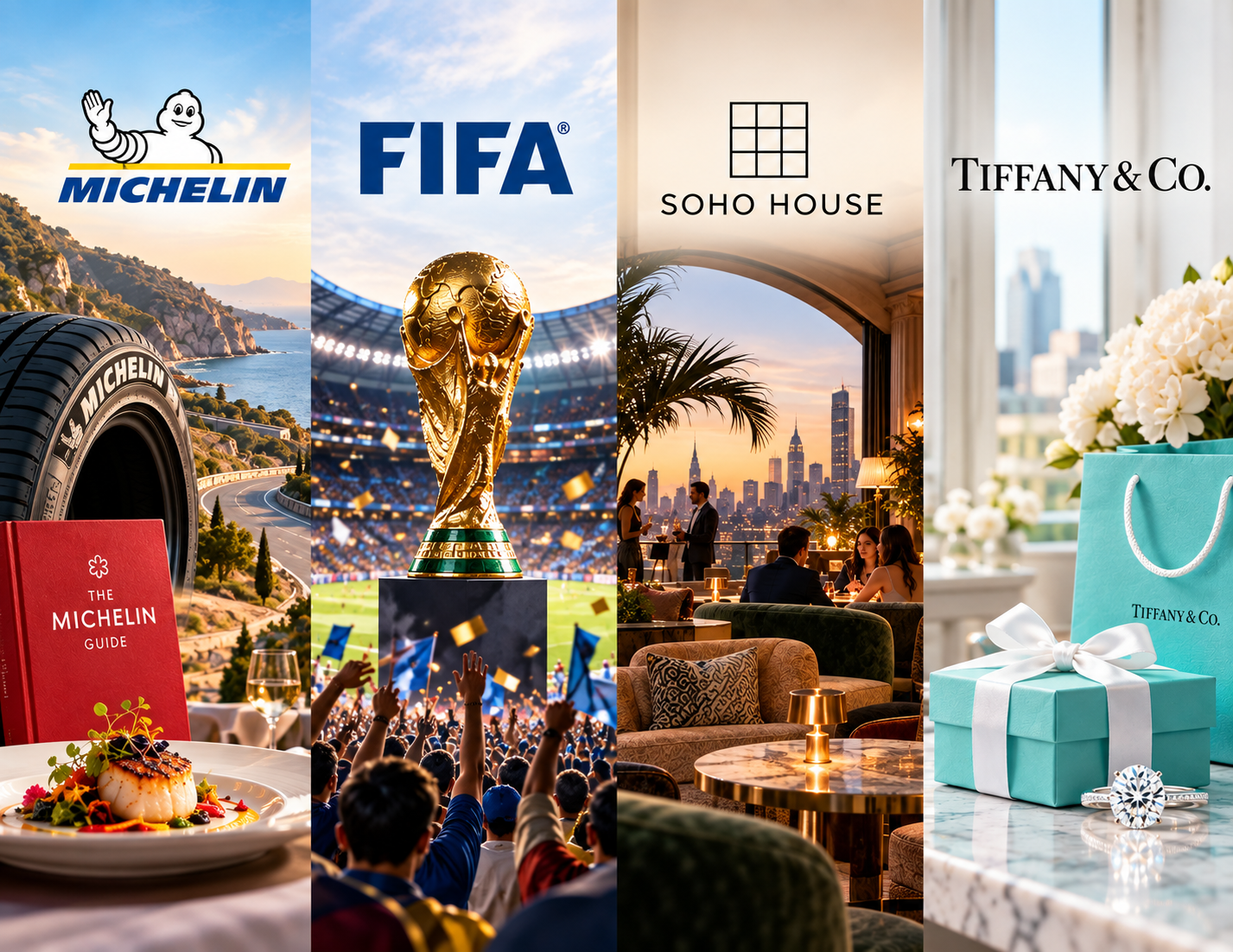
可是如果我们仔细收听过《柠檬变成柠檬水》播客制作的四个商业案例 - Michelin、FIFA、Soho House 和 Tiffany,你会发现它们真正创造价值的地方,往往已经远远超出了表面上销售的那个产品。
Michelin:卖的是轮胎,还是帮助人们更好地探索世界?
米其林最有意思的地方,是今天很多人第一次接触到这个名字,甚至不是因为轮胎,而是因为餐厅。那么,一家轮胎公司,为什么会成为全世界最有影响力的餐厅评价机构之一?
答案和我们今天要聊的这个关键问题有关:What business are you really in?
如果100多年前的米其林只把自己定义成一家生产和销售轮胎的公司,那么它最自然的战略就是不断研究怎样制造更好的轮胎、开更多轮胎店、卖出更多轮胎。但米其林对自己的理解显然更宽。它意识到,轮胎真正的使用场景是人们开车出行和探索世界。于是,鼓励人们开车去更多地方,本身就可以扩大轮胎的需求。《米其林指南》因此诞生,最初为驾车者提供地图、酒店、餐厅等旅行信息,让人们有更多理由开车上路。
这就是 “What business are you in?” 如此重要的原因。你如何定义自己的生意,会直接决定你看见什么机会。 如果米其林认为自己只是在做轮胎,它看到的机会可能都在轮胎行业里;但当它把自己放进更大的“出行与探索”场景里,一家餐厅、一座城市、一次旅行,都可能成为它创造价值的一部分。
更有意思的是,100多年以后,《米其林指南》已经拥有了远远超出“帮助卖轮胎”的独立品牌价值。一颗米其林星星甚至可能改变一家餐厅的命运,把它推向更加广阔的舞台。米其林也因此建立了另外一种非常稀缺的资产 – 新人。当消费者面对成千上万家餐厅不知道如何选择时,米其林实际上提供的是 confidence in your decision:你可以相信,这一家值得你专程去体验。
所以米其林这个案例对公司来说,如何定义自己的生意,不仅决定你卖什么,也决定你的品牌可以走多远、进入哪些新的市场和消费者生活场景。
FIFA:卖是足球比赛,还是全球注意力?
如果仅仅把 FIFA 定义成一个举办世界杯足球比赛的组织,我们很容易把它的产品理解成90分钟的比赛。但在我们有关世界杯的那一集节目里,我们提出过一个更有意思的问题:世界杯究竟是一项足球赛事,还是全世界规模最大的一场娱乐活动?FIFA真正出售的,究竟是比赛门票和电视版权,还是全球几十亿人在同一个时间共同投入的注意力?
在那一集里,我们讨论了世界杯的价值并不只存在于球场里。它存在于电视转播、品牌赞助、社交媒体、旅游、酒店、球衣、明星、广告,以及全世界人们围绕世界杯产生的讨论、情绪和共同记忆中。尤其有意思的是,世界杯四年才举办一次。表面上看,这限制了FIFA赚钱的频率;但恰恰因为四年一次,它创造了巨大的稀缺性。
所以 FIFA 真正拥有的,也许并不仅仅是一项体育赛事。它拥有的是一种极其罕见的能力:在一个特定时间,把全世界大量人的注意力和情感集中在同一个地方。一旦拥有了这种能力,媒体版权,赞助,广告,授权商品,甚至举办城市本身,都可以围绕它产生商业价值。
换句话说:FIFA表面上经营足球,实际上经营的是全球注意力。
Soho House:卖的是酒店和餐厅,还是“我属于哪里”?
Soho House 如果只看它拥有的资产,你可能会认为它是一家酒店服务集团。它有会所、餐厅、酒店、办公空间,后来还发展出了 Soho Works、Soho Home 等业务。
但如果 Soho House 真正卖的是房间、餐饮和办公空间,就很难解释为什么人们愿意先申请会员、接受筛选,再每年支付会员费,然后还要另外支付餐饮、酒店和其他消费。
在我们的 Soho House 节目里,我们讨论了私人俱乐部会员模式的核心,那就是提供高质量体验,同时通过专属性、服务和定制化体验创造会员价值。Soho House 真正卖的可能不是一张床、一顿饭,甚至也不只是一张会员卡。它卖的是:“Who do I belong with?(我属于哪里)”。当你加入 Soho House,你购买的不只是进入一个空间的权利,更是进入一个特定社群、与一群志趣相投的人建立联系的机会。
所以,Soho House 真正经营的,不只是酒店、餐厅和会所,而是归属感、身份认同和进入特定圈层的机会。这也解释了为什么它在扩张的时候会面临一个非常微妙的战略矛盾。会员越多,Soho House收入当然会越高;但如果所有人都可以加入,原本让会员愿意加入的专属性又可能被稀释。我们在那一集节目里其实已经触及了这个矛盾:全球扩张和开放带来了增长,却也引起一些老会员的不满
因此 Soho House 真正需要管理的是一个更加抽象的资产:谁属于这个社群,以及这个社群意味着什么。
Tiffany:卖的是珠宝,还是人生重要时刻的意义?
如果单从产品角度定义,Tiffany 是一家珠宝公司。但是当很多人在购买Tiffany的时候,并不仅仅是在购买金属和宝石。他们真正在购买的是爱情、承诺、成功、纪念、身份,甚至是某个人生阶段的象征。
这也是为什么 Tiffany 能够通过《Breakfast at Tiffany's》、美国文化、艺术、时尚和一系列文化符号,建立远远超过产品本身的意义。我们在Tiffany那一集播客里,把它总结为:一个成功的奢侈品牌需要成为某种独特文化的代表符号,而 Tiffany 与美国文化的长期关联正是它的重要资产。
LVMH 收购Tiffany 后做的一件非常聪明的事情,就是没有把它变成另外一个欧洲奢侈品牌,而是在保留它“美国奢华”DNA的同时,通过新的艺术、时尚和文化合作,让这个历史悠久的品牌重新进入年轻消费者的文化对话。所以 Tiffany 真正出售的并不仅仅是珠宝,而是人生重要时刻的意义。一件 Tiffany 珠宝之所以可以远远超过材料本身的价值,是因为消费者把自己的故事放了进去。
总结:
所以,综合来看,这四家公司,其实都做了同一件事,那就是真正理解他们在卖什么:
Michelin 表面卖轮胎,却建立了信任。
FIFA 表面卖足球,却聚集了注意力。
Soho House 表面卖空间,却创造了归属感。
Tiffany 表面卖珠宝,却是在纪念人生的意义。
当然,有了这些很高尚的定位,并不等于它们在停止卖原来的产品。米其林仍然要制造好轮胎。FIFA仍然需要精彩的足球比赛。Soho House仍然必须有漂亮的空间和好的服务。Tiffany仍然必须制造优秀的珠宝。
因此,产品是企业与客户建立关系的入口,但产品本身并不一定是商业价值的终点。 很多企业在制定战略时容易犯的一个错误,就是习惯用“我们生产什么、销售什么”来定义自己,而不是进一步思考:客户为什么需要我们?我们真正为客户创造的价值到底是什么?
当一家企业能够从“我们卖什么”,进一步理解到“客户真正从我们这里得到什么”,它对 “What Business Are You Really In?”(我们真正做的是什么生意?) 这个问题,也就会有一个更加清晰的答案。而这个答案,往往会决定一家企业如何看待自己的市场、竞争对手,以及未来还有哪些新的增长机会。
Over the past four years, Poy and I have analyzed more than 110 business cases on our podcast, “Turn Lemons Into Lemonade”. Today, I want to explore one of the most important, and often overlooked, questions in business. It is not simply, “What products do we sell?” but rather, “What business are we really in?”
I have facilitated workshops around this question before, so some of you may already be very familiar with it. It sounds very simple. Yet many companies still define themselves primarily by what they produce: a tire company sells tires, a sports organization stages games, a private club provides spaces, and a jewelry company sells jewelry.
But if we look more closely at four business cases we have explored on the “Turn Lemons Into Lemonade” podcast, Michelin, FIFA, Soho House, and Tiffany & Co., we begin to see that the value they truly create extends far beyond the products or services they appear to sell.
Michelin: Is It Selling Tires, or Helping People Explore the World?
One of the most fascinating things about Michelin is that today, many people encounter the Michelin name not through tires, but through restaurants. So how did a tire company become one of the most influential restaurant-rating authorities in the world?
The answer has a lot to do with the question we are exploring today: What business are you really in?
If Michelin had defined itself 100 years ago simply as a company that manufactured and sold tires, the obvious strategy would have been to make better tires, open more tire stores, and sell more tires.
But Michelin took a broader view. It understood that tires are used when people drive, travel, and explore. Encouraging people to drive to more places could therefore increase demand for tires. That thinking led to the creation of the Michelin Guide, which originally provided motorists with useful travel information, including maps, hotels, and restaurants, giving people more reasons to get in their cars and hit the road.
This is exactly why “What business are you in?” is such an important question. How you define your business determines the opportunities you are able to see. If Michelin had thought of itself only as a tire company, most of the opportunities it saw would probably have remained within the tire industry. But by placing itself within the much broader world of mobility, travel, and exploration, a restaurant, a city, or an entire journey could become part of the value Michelin created.
More than a century later, the Michelin Guide has developed a brand value that goes far beyond its original purpose of helping sell tires. A Michelin star can change the trajectory of a restaurant and introduce it to a global audience.
In the process, Michelin has also built another extremely valuable asset: trust. When consumers are faced with thousands of restaurants and do not know which one to choose, Michelin provides something increasingly valuable: confidence in your decision. You trust that a Michelin-recommended restaurant may be worth making a special trip to experience.
The Michelin case therefore illustrates something much bigger: how you define your business determines not only what you sell, but how far your brand can travel, which markets it can enter, and how many different parts of a consumer’s life it can become relevant to.
FIFA: Is It Selling Football, or Global Attention?
If we define FIFA simply as an organization that stages the World Cup, it is easy to think of its product as a 90-minute football match.
But in our episode about the World Cup, we asked a more interesting question: Is the World Cup really a football tournament, or is it one of the largest entertainment events in the world? And what is FIFA actually selling—tickets and broadcasting rights, or the attention of billions of people focused on the same event at the same time?
The value of the World Cup extends far beyond what happens on the pitch. It exists in television broadcasting, sponsorships, social media, tourism, hotels, jerseys and merchandise, celebrity athletes, advertising, and the conversations, emotions, and shared memories that people around the world create around the tournament.
What makes it even more interesting is that the World Cup happens only once every four years. On the surface, that limits how frequently FIFA can monetize the event. But that same four-year cycle also creates tremendous scarcity.
So perhaps FIFA’s most valuable asset is not simply a football tournament. It is the rare ability to concentrate an extraordinary amount of global attention and emotion around one event at one moment in time.
Once you have that ability, broadcasting rights, sponsorships, advertising, licensed merchandise, tourism, and even the host cities themselves can all generate economic value around it.
In other words, FIFA may appear to be in the football business, but it is also in the business of global attention.
Soho House: Is It Selling Hotels and Restaurants, or a Sense of “Where I Belong”?
If you look only at its physical assets, you might describe Soho House as a hospitality and lifestyle company. It operates private clubs, restaurants, hotels, and workspaces, and has expanded into businesses such as Soho Works and Soho Home.
But if Soho House were simply selling hotel rooms, meals, and workspaces, it would be difficult to explain why people are willing to apply for membership, go through a selection process, pay an annual membership fee, and then pay again for food, hotel stays, and other experiences.
In our Soho House episode, we discussed how the private-club membership model creates value through high-quality experiences, exclusivity, service, and personalization.
What Soho House is really selling may not be a bed, a meal, or even a membership card. It is answering a more personal question: “Who do I belong with?”
When you join Soho House, you are not simply buying access to a physical space. You are buying access to a particular community and the opportunity to connect with people who may share similar interests, lifestyles, or creative ambitions.
So what Soho House really manages is not simply hotels, restaurants, and clubs. It is belonging, identity, and access to a particular community.
This also explains one of the strategic tensions Soho House faces as it grows. More members can generate more revenue. But if almost anyone can become a member, the exclusivity that attracted people in the first place may begin to weaken. We touched on exactly this tension in our podcast: global expansion and greater accessibility can fuel growth, but they can also create dissatisfaction among long-standing members.
So the more abstract, and perhaps more important, asset Soho House has to manage is who belongs to the community and what that community represents.
Tiffany: Is It Selling Jewelry, or the Meaning of Life’s Important Moments?
From a purely product perspective, Tiffany & Co. is a jewelry company.
But when people buy Tiffany, they are rarely buying only precious metals and gemstones. They may also be buying symbols of love, commitment, achievement, celebration, identity, or an important stage in life.
That helps explain why Tiffany has been able to build meaning far beyond its physical products through “Breakfast at Tiffany’s”, its connection with American culture, and its long-standing presence in art, fashion, and popular culture.
In our Tiffany episode, we discussed how successful luxury brands often become symbols of a distinctive culture. Tiffany’s deep association with American culture has become one of its most important brand assets.
One of the smart things LVMH did after acquiring Tiffany was not to simply turn it into another European luxury brand. Instead, it preserved Tiffany’s distinctive American luxury DNA, while using new collaborations in art, fashion, and culture to bring this historic brand back into the cultural conversation with younger consumers.
So Tiffany is not simply selling jewelry. It is selling meaning around some of life’s most important moments. A Tiffany piece can become worth far more to its owner than the value of the materials from which it is made because the customer places their own story inside it.
So, What Business Are You Really In?
When we put these four companies side by side, we can see that they have something important in common. They understand that what customers are really buying can extend far beyond the physical product:
Michelin appears to sell tires, but it has built trust.
FIFA appears to sell football games, but it concentrates attention.
Soho House appears to sell space, but it creates belonging.
Tiffany appears to sell jewelry, but it helps people commemorate meaningful moments in life.
Of course, having a higher-order conceptual definition of your business does not mean the underlying product stops mattering. Michelin still has to make excellent tires. FIFA still needs compelling football. Soho House still needs beautiful spaces and strong service. Tiffany still needs to make exceptional jewelry.
The product is the entry point into the relationship between a company and its customers, but the product itself is not necessarily where the value ends.
One of the easiest strategic mistakes for companies to make is defining themselves by “what we make and sell” rather than asking deeper questions: Why do customers need us? What value are they really getting from us?
When a company can move from understanding “what we sell” to understanding “what our customers are really buying from us,” it can begin to answer “What business are we really in?” much more clearly.
And that answer can fundamentally change how a company thinks about its market, its competitors, and where its next opportunities for growth might come from.