奥斯卡搬家去YouTube,到底值不值?
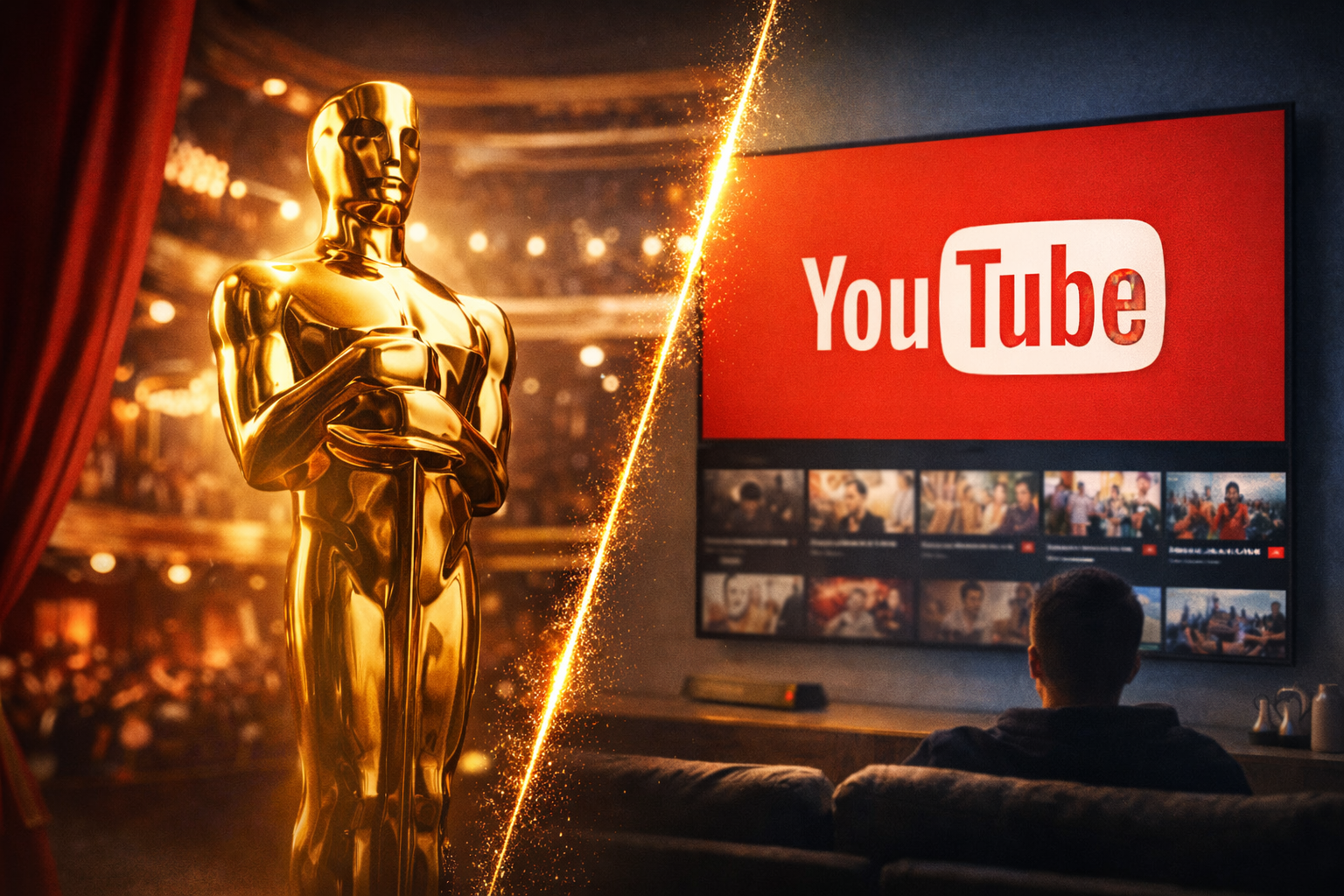
我一直觉得,奥斯卡的价值从来不在每年那一晚的颁奖典礼本身。真正的价值是奥斯卡这个品牌。每当人们谈起奥斯卡,往往会不自觉地联想到三个关键词:Exclusive(独家)、Glamorous(华丽)和 Prestigious(崇高)。正是这三个关键词,把一场原本带有明显行业自娱性质的好莱坞晚宴,慢慢推成了一个全球知名的并且带有强烈情感色彩的文化符号。也正因为这种长期累积下来的品牌光环,奥斯卡的电视转播权,至今仍然能够卖到每年大约一亿美元的价格。
那么说到 YouTube,你也会用这三个词来形容它吗?恐怕很难。这也正是为什么当我这周看到新闻说,从 2029 年第 101 届奥斯卡开始,奥斯卡学院将与 YouTube 签署一份为期五年的转播协议时,作为一个品牌策略顾问,我的第一反应就是觉得如果从品牌角度来看,这个决定多少带着一点风险。
当然从表面看,这个决定的逻辑并不复杂。对大多数五十岁以下的人来说,YouTube 可能早已等同于电视。尼尔森的数据显示,在美国通过电视屏幕观看的所有网络内容中,YouTube 已经占据了大约 13% 的观看时长,超过任何一家流媒体平台或传统电视网。因此,把奥斯卡从 ABC 转移到一个在全球拥有二十多亿用户的数字平台,对奥斯卡而言,也可以被理解为是一次试图为长期低迷的收视率寻找新出口的尝试。
毕竟,1998 年奥斯卡的观众规模还高达 5700 万,而在今天这个高度碎片化的媒体环境中,已经下滑到不足 2000 万。如果再往前看把时间线拉到 2030 年,电视本身或许早已不再由传统电视网定义,谁的内容能被看见、如何被看见,或许很可能会集中在 YouTube、Amazon Prime Video、Netflix 等少数几个平台手中。而在这些平台里,只有 YouTube 是免费、无门槛、真正面向全球任何人开放的。对一个正在逐渐变得小众、同时又渴望重新获得全民关注的品牌来说,这样的覆盖能力,确实具有难以抗拒的吸引力。
也正因为如此,从我在网站上看到的信息来说,学院内部对这次转向的态度更像是一种复杂的权衡,也没有遇到会员情绪化的反对。据说在谈判过程中,奥斯卡学院的成员也反复讨论了这个决定的“rick factor”。但最终,商业谈判还是要回到现实条件上来。YouTube 至少愿意在价格上接近奥斯卡现有的转播收入,同时也同意接手一些 现在ABC 并不太感兴趣的活动,比如理事奖。在节目制作上,YouTube 也基本选择放手,让奥斯卡按照自己的意愿来呈现颁奖礼。
正是在这样的背景下,奥斯卡将在五十三年后正式离开 ABC。从更宏观的角度看,这个结果其实也符合当下好莱坞的整体走向,例如甲骨文创始人家族的小埃里森买下派拉蒙,Netflix 正在推进对华纳兄弟的收购,亚马逊获得了詹姆斯·邦德的控制权,迪士尼也开始将最核心的卡通 IP 拿出来与 OpenAI 开展合作等。一条条新闻不断提醒我们,传统好莱坞已经开始向科技巨头的体系中靠拢。在这样的时代背景下,YouTube 拿下奥斯卡,在某种程度上显得顺理成章。
但即便如此,从品牌角度出发,我个人仍然对这笔交易保持保留态度。YouTube 最大的优势在于它几乎对所有人开放,而这恰恰与奥斯卡的品牌逻辑与价值存在着一定的矛盾。ABC 虽然也是大众电视网,但它一直有严格的策划和筛选,有些内容天生就不可能出现在 ABC 上。1976 年,ABC 花一百万美元从 NBC 手中抢下奥斯卡,说到底,就是想要一档看起来体面、同时又能吸引大众目光的节目。后来即便成本不断上升、收视持续下滑,东家迪士尼依然选择把奥斯卡留在 ABC,原因并不仅仅是广告收入,而是奥斯卡所代表的那层长期积累下来的品牌光环。
反过来看 YouTube,问题并不在于它不够大,而恰恰在于它太大了,什么内容都有。当一切都被并列摆放时,“特别”和“独家”这样的品牌承诺,本身就很难被真正兑现。奥斯卡一旦出现在 YouTube 上,就不可避免地要与瑜伽视频、装修教程、AI 生成的假电影预告片仅仅隔着一次点击。原本被精心维护的仪式感和距离感,会被直接放进一个没有明确层级的内容货架中。
从商业角度看,YouTube 当然也有自己的打算。奥斯卡能帮助它向高端广告客户证明,它不仅能承载流量内容,也能承接顶级、昂贵、讲究形象的文化事件。某种意义上,我甚至认为,奥斯卡为 YouTube 带来的品牌提升,可能会大于 YouTube 对奥斯卡品牌造成的稀释。至于观众是否会立刻在 YouTube 上重新找到奥斯卡,目前仍然是一个未知数。
因此奥斯卡显然是在押注增长潜力,用品牌的情感价值去交换更大的功能价值和分发能力。但这种交换注定是有代价的。如果品牌的情感价值被消耗得过快,那么当年那个几乎不可替代的文化符号,最终还能剩下多少真正可持续的价值,这恐怕才是奥斯卡需要面对的更长期问题。
Can the Oscars Stay Prestigious on YouTube?
I’ve always felt that the true value of the Oscars has never really been the awards ceremony itself on that one night each year. The real value lies in the Oscar brand. Whenever people talk about the Oscars, they almost instinctively associate it with three keywords: exclusive, glamorous, and prestigious. It is precisely these three qualities that gradually transformed what was originally a self-congratulatory Hollywood industry banquet into a globally recognized cultural symbol with strong emotional values. And it is also because of this brand asset, accumulated over time, that the Oscars’ television broadcast rights can still command roughly $100 million per year today.
So the question is: would you use those exact three words to describe YouTube? Probably not. That is why, when I saw the news this week that the Academy plans to sign a five-year broadcast deal with YouTube starting with the 101st Oscars in 2029, my first reaction was that, from a branding perspective, the decision could carry some risks.
On the surface, the logic behind the move seems to make sense. For most people under the age of 50, YouTube has long been functionally equivalent to television. Nielsen data shows that among all internet content watched on TV screens in the United States, YouTube accounts for about 13% of total viewing time, more than any streaming platform or traditional television network. From this standpoint, moving the Oscars from ABC to a digital platform with more than two billion users worldwide can be understood as an attempt to find a new outlet for its long-declining ratings.
After all, in 1998 the Oscars drew as many as 57 million viewers. Today, in a highly fragmented media environment, that number has fallen to under 20 million. Looking further ahead to around 2030, television itself may no longer be defined by traditional networks. Who gets seen, and how content gets seen, may well be concentrated in the hands of a few platforms such as YouTube, Amazon Prime Video, and Netflix. And among these, YouTube is the only one that is free and truly open to anyone around the world. For a brand that is gradually becoming more niche while still yearning to regain mass attention, that kind of reach is undeniably tempting.
For this reason, based on information I’ve seen reported, the Academy’s internal perception toward the shift appears to have been one of careful trade-offs rather than emotional resistance. During negotiations, Academy members reportedly discussed the “risk factor” of the decision repeatedly. But in the end, YouTube was at least willing to come close to the Oscars’ existing broadcast revenue, and it also agreed to take on certain events that ABC had little interest in, such as the Governors Awards. In terms of production, YouTube has largely chosen to step back and allow the Oscars to present the ceremony according to its own vision.
Against this backdrop, the Oscars will officially leave ABC after 53 years. From a broader perspective, this decision also aligns with Hollywood's recent trend - the son of Oracle’s founder has acquired Paramount. Netflix is pushing forward with a bid for Warner Bros. Discovery. Amazon has gained control of the James Bond franchise, and Disney has begun partnering with OpenAI using its most valuable animation IP. One headline after another reminds us that traditional Hollywood is increasingly gravitating toward the ecosystems of major tech companies. In that context, YouTube landing the Oscars feels, in some ways, inevitable.
Even so, from a branding standpoint, I personally remain cautious about this deal. YouTube’s greatest strength, being open to almost everyone, also happens to conflict with some of the Oscars’ brand values. Although ABC is a mass-market network, it has always operated with strict curation and selection; certain content simply could never appear on ABC. When ABC took over the Oscars from NBC in 1976, its goal was to secure a program that looked respectable while still attracting broad public attention. Even as costs rose and ratings declined over time, Disney continued to keep the Oscars on ABC not merely for advertising revenue, but for the long-accumulated brand values the Oscars represented.
By contrast, the issue with YouTube is not that it’s too small, but that it’s too big - everything exists there. When all content is placed side by side, brand promises like “special” and “exclusive” become inherently difficult to deliver. Once the Oscars appear on YouTube, they inevitably sit just one click away from yoga videos, home renovation tutorials, and AI-generated fake movie trailers. The carefully maintained sense of prestige will be dropped into a sea of content with no clear hierarchy.
From a business perspective, YouTube has its own goals. The Oscars will definitely help YouTube demonstrate to premium advertisers that it can host not only mass-traffic content, but also top-tier, expensive cultural events. In fact, in some sense, I even believe the brand lift YouTube gains from the Oscars may exceed the dilution YouTube causes to the Oscars brand. As for whether audiences will immediately rediscover the Oscars on YouTube, that remains an open question.
Ultimately, the Oscar Academy is clearly betting on growth potential, potentially trading emotional brand value for greater functional value and distribution power. But this exchange will inevitably come at a cost. If the emotional value of the brand is consumed too quickly, how much truly sustainable value will remain of what was once an almost irreplaceable cultural symbol? That, perhaps, is the more long-term question the Oscars will have to confront.