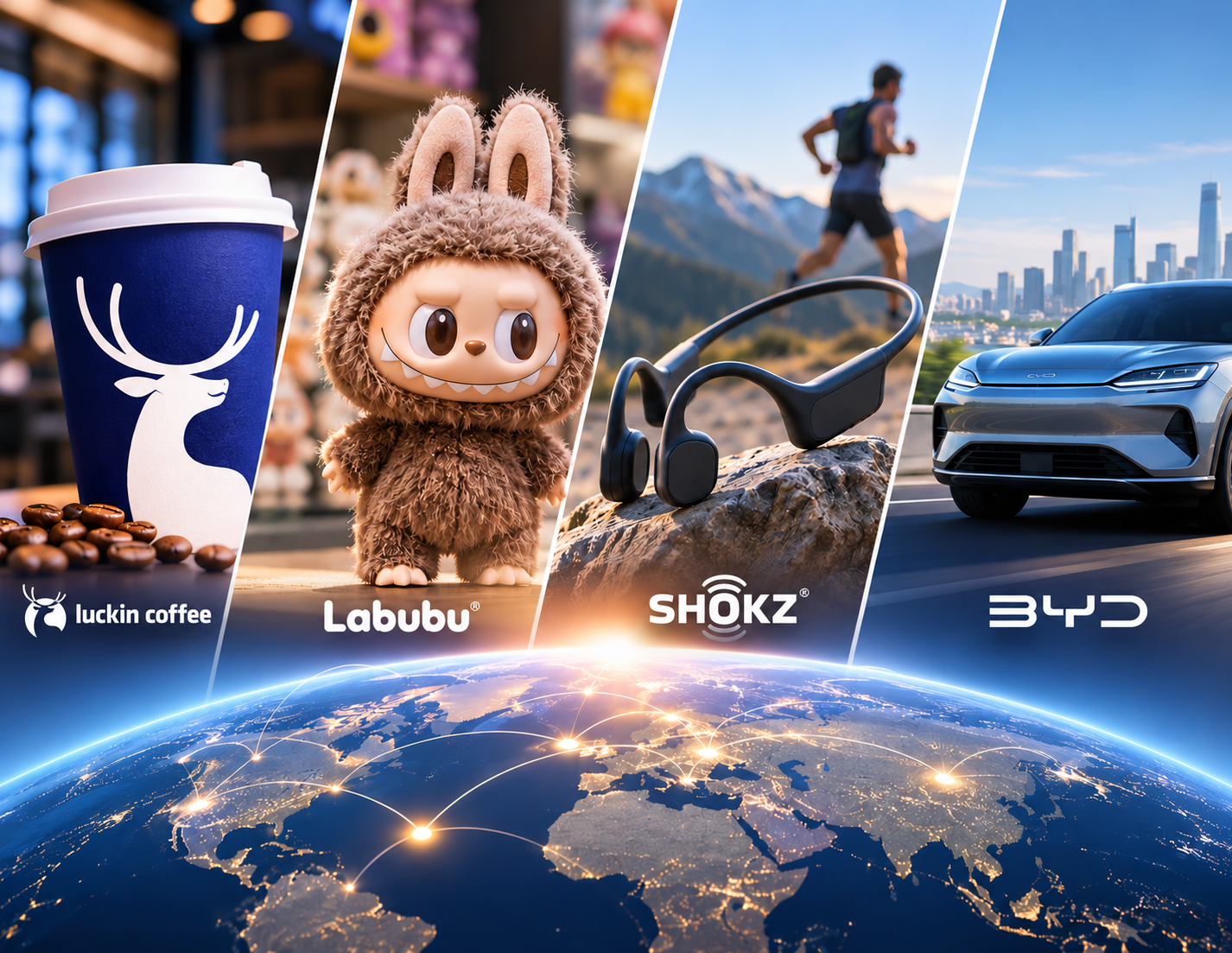
过去四年,我和Poy Zhong在《柠檬变成柠檬水》播客中分析了110多个商业案例,其中大部分是北美和欧洲品牌。但在我们的播客里,我们也开始越来越关注中国品牌,他们都正在以自己的方式进入国际市场,开始改变全球消费者对中国品牌的传统印象。
这一次,我们选择四个来自中国 - 瑞幸咖啡、Labubu、韶音和比亚迪 - 来探讨它们各具特色的出海模式,以及背后值得借鉴的商业战略与竞争优势。
当你把这四个案例放在一起后,你会发现它们都正在回答三个非常重要的战略问题:中国企业的竞争优势究竟发生了什么变化?进入国际市场,是否一定要复制西方品牌?在中国取得成功的商业模式,又如何才能在全球市场继续成功?
瑞幸咖啡:为什么不是下一个星巴克?
过去提到咖啡连锁品牌,很多人首先想到的就是星巴克。它建立了一套非常成功的商业模式:舒适的门店、独特的咖啡体验,以及家庭和办公室之外的“第三空间”。但瑞幸并没有简单复制星巴克。
瑞幸从一开始就更加重视数字化点单、便捷取餐、小型门店和快速的产品创新。它希望吸引的,并不只是那些喜欢在咖啡馆里坐上半个小时的消费者,还有大量追求方便、效率和性价比的日常咖啡饮用者。瑞幸抓住的不是与星巴克相同的消费需求,而是另一种咖啡消费场景。那么,当瑞幸走向海外市场时,是否应该为了迎合当地消费者,逐渐变得更像星巴克?
答案是非常确定的不是。在海外扩张旅程当中,瑞幸也把这种差异化的商业模式带到海外市场。无论是在新加坡,还是进入美国市场,瑞幸并没有把自己重新包装成另一个星巴克,而是继续强调数字化点单、便捷取餐、产品创新和高效运营。
当然,瑞幸也并非完全照搬中国模式。不同国家的咖啡文化、消费者口味和市场环境各不相同,因此它也在调整产品组合、价格策略和门店布局。但这些本地化调整,并没有改变其核心定位:让消费者以更方便、更高效的方式,买到一杯好喝、价格合理的咖啡。
瑞幸的海外扩张仍处于发展阶段,最终能否复制中国市场的成功,还需要时间验证。但至少从目前的战略方向来看,它正在坚持自己与星巴克不同的竞争方式,而不是进入一个星巴克已经非常擅长的领域,与之正面竞争。
这个案例给我们的战略启发是:进入一个新市场,并不意味着必须模仿当地最成功的竞争对手。真正重要的是,清楚自己为什么与众不同,并且知道如何让这种不同在新市场继续创造价值。
Labubu:从中国制造到中国文化影响力
如果说瑞幸代表了一种新的商业模式,那么泡泡玛特旗下的Labubu,则代表了中国品牌国际化的另一种可能。
在过去,中国企业在全球消费品市场的优势主要来自制造能力。我们擅长生产玩具、服装、电子产品,但许多真正拥有品牌溢价的角色和故事,却来自迪士尼、日本动漫以及其他国际品牌。
但是Labubu的走红,让我们看到了一个不同的方向。消费者购买Labubu,并不是因为它比其他玩具更便宜,也不是因为它有多么复杂的功能。他们喜欢它独特的形象、收藏的乐趣、开盲盒的期待,以及在社交媒体上分享和交流的体验。当一个玩具成为时尚配饰、社交话题,甚至个人品味的表达时,它的商业价值就远远超过了制造成本。
Labubu最值得研究的地方,是它证明了中国企业不仅能够制造产品,也有机会创造让全球消费者主动追逐的品牌和文化符号。
当然Labubu也面临着这样一个挑战:一个产品的突然走红,究竟是短暂的流行,还是可以持续经营几十年的品牌资产?所以如何从一个爆款产品发展成一个长期受到喜爱的品牌,应该是泡泡玛特未来更重要的挑战。
韶音:不一定要打败苹果,而是找到自己的市场
韶音是我非常喜欢的另一个案例。在全球耳机市场,苹果、索尼、Bose等品牌已经拥有很强的市场地位。如果韶音只是生产一款价格更低、功能类似的耳机,它很容易陷入与这些巨头的直接竞争。
但韶音选择了另外一条路。它围绕跑步、骑行和其他运动场景,发展开放式耳机,让消费者在听音乐的同时,仍然能够感知周围环境。对于户外运动爱好者来说,这种体验与传统入耳式耳机有很大不同。
韶音的竞争优势,并不只是某一项技术,而是它非常清楚自己要服务哪一群消费者,以及这群消费者有哪些尚未被充分满足的需求。
这个案例提醒我们,市场竞争并不总是要争夺最大的消费群体。有时候,找到一个足够重要、却被行业领导者忽略的需求,反而能够建立更加清晰的品牌定位。
比亚迪:价格优势背后,究竟是什么能力?
比亚迪可能是这四家公司中最能体现中国制造业竞争力变化的案例。过去,一提到中国汽车,海外消费者往往首先想到价格便宜。但比亚迪的竞争优势显然不能只用低价解释。
从电池技术、零部件生产,到供应链管理、规模化制造和产品开发,比亚迪建立了一套高度整合的产业体系。这种能力让它能够在控制成本的同时,持续推出具有竞争力的新能源汽车。
所以,比亚迪真正值得其他企业学习的,不是如何把产品卖得更便宜,而是如何通过整个商业体系的设计,创造别人难以轻易复制的成本和效率优势。
但汽车也是一个非常特殊的行业。消费者购买的不只是一辆车,还包括未来多年的维修、保养、可靠性和品牌保障。因此,比亚迪进入加拿大及其他海外市场,面临的挑战并不只是产品是否有竞争力,还包括如何建立经销和服务网络、获得消费者信任,以及适应不同国家的政策与监管环境。
所以,在中国市场形成的技术和成本优势,可以帮助比亚迪打开国际市场的大门;但要真正建立一个全球汽车品牌,还需要长期的本地化经营。
总结:如果把瑞幸、Labubu、韶音和比亚迪放在一起,我觉得这并不只是四个中国品牌走向世界的故事,而是三个更普遍的商业启发。
竞争优势正在从低成本制造,走向更全面的商业能力。瑞幸依靠运营效率和产品创新,Labubu依靠品牌文化和情感吸引力,韶音依靠技术与消费者需求的结合,比亚迪则依靠供应链、技术和规模化制造。它们的竞争优势各不相同,但都不只注重价格便宜。
成功的企业不一定需要复制行业领导者。瑞幸不需要成为星巴克,Labubu不需要成为迪士尼,韶音不需要成为苹果,比亚迪也不需要成为特斯拉。真正优秀的战略,不是不断追问“我们怎样才能像竞争对手一样成功”,而是思考:我们能够为哪些消费者,创造竞争对手尚未提供的独特价值?
本土成功不等于全球成功。中国庞大的市场为企业提供了快速创新、试验产品、积累规模和优化商业模式的机会。但进入海外市场以后,消费者习惯、文化背景、监管要求和竞争环境都可能发生变化。因此,国际化并不是简单地把中国成功的模式搬到另一个国家,而是要弄清楚:哪些能力是可以跨越国界的竞争优势,哪些做法则必须根据当地市场重新设计。
这也是为什么我觉得,这四个案例对所有企业都有借鉴意义,而不仅仅是对希望出海的中国公司。无论企业来自哪个国家,最终都需要回答同样的问题:我们真正的竞争优势是什么?它为什么对客户重要?当市场环境改变时,这种优势还能否继续发挥作用?
全球竞争力不是把一个成功模式复制到更多国家,而是拥有一种能够在不同市场持续创造客户价值的能力。这正是这些中国品牌走向世界,最值得我们学习的地方。
From Luckin Coffee to BYD:
Four Chinese Brands, Four Different Paths to Global Competitiveness
Over the past four years, Poy Zhong and I have analyzed more than 110 business cases on our Turn Lemons Into Lemonade podcast, most of them featuring North American and European brands. But increasingly, we've also turned our attention to Chinese brands that are entering international markets in their own distinctive ways, challenging traditional perceptions of what Chinese companies can offer global consumers.
In this article, we've selected four Chinese brands we discussed on our podcast — Luckin Coffee, Labubu, Shokz, and BYD — to explore their different approaches to international expansion and the business strategies and competitive advantages behind them.
When we look at these four cases together, three important strategic questions emerge: How is the nature of Chinese companies' competitive advantage evolving? Does international expansion require following the playbook of successful Western brands? And how can a business model that works in China continue to succeed in global markets?
Luckin Coffee: Why Become the Next Starbucks?
When people think of coffee chains, Starbucks is often the first name that comes to mind. It has built a highly successful global business model, a distinctive coffee experience, and the idea of a "third place" between home and work.
But Luckin Coffee didn't simply copy Starbucks.
From the beginning, Luckin emphasized digital ordering, convenient pickup, smaller store formats, and rapid product innovation. It wasn't targeting only consumers who enjoy spending half an hour relaxing in a café. It also recognized a large segment of everyday coffee drinkers who prioritize convenience, efficiency, and value.
In other words, Luckin wasn't necessarily competing for the same coffee occasion as Starbucks. It was serving a different consumer need.
So, as Luckin expands internationally, should it gradually become more like Starbucks to appeal to local consumers?
As Luckin has expanded into overseas markets, including Singapore and the United States, it has continued to emphasize the same fundamental strengths: digital ordering, convenient pickup, product innovation, and operational efficiency.
Of course, this doesn't mean Luckin can simply replicate its Chinese model everywhere. Coffee cultures, consumer preferences, and market conditions vary across countries. Luckin has therefore been adapting its product offerings, pricing, and store formats to local markets.
But these adjustments haven't changed its core proposition: making it easier and more convenient for consumers to enjoy a good cup of coffee at a reasonable price.
Luckin's international expansion is still evolving, and whether it can replicate its success in China remains to be seen. But strategically, it appears committed to competing differently from Starbucks rather than challenging Starbucks directly on the strengths that have made it so successful.
The strategic lesson: Entering a new market doesn't mean imitating its most successful competitor. What matters is understanding what makes your business different and how that difference can continue to create value in a new market.
Labubu: From Made in China to Chinese Cultural Influence
If Luckin represents a different approach to business model innovation, Labubu, the collectible character developed under Pop Mart, represents another possibility for Chinese brands going global.
Historically, China's competitive advantage in global consumer markets has been closely associated with manufacturing. Chinese companies have excelled at producing toys, clothing, and electronics, while many of the characters, stories, and brands commanding significant price premiums have come from Disney, Japanese animation, and other international entertainment companies.
Labubu's global popularity suggests that this dynamic may be changing.
Consumers don't buy Labubu because it is cheaper than other toys or because it offers sophisticated functionality. They are drawn to its distinctive personality, the joy of collecting, the anticipation of opening a mystery box, and the social experience of sharing their collections online.
When a toy becomes a fashion accessory, a social conversation starter, or even an expression of personal identity, its commercial value extends far beyond its manufacturing cost.
What makes Labubu particularly interesting is that it demonstrates how Chinese companies can do more than manufacture products. They can also build brands and cultural symbols that consumers around the world actively seek out.
Of course, Labubu faces an important challenge: Is its extraordinary popularity a passing trend, or can it become a brand asset that remains relevant for decades?
For Pop Mart, the next challenge may be even more important than creating a blockbuster product: turning that product into an enduring brand that consumers continue to love long after the initial excitement fades.
Shokz: You Don't Have to Beat Apple to Build a Successful Brand
Shokz is another case I particularly like.
The global headphone market is dominated by powerful players such as Apple, Sony, and Bose. If Shokz had simply introduced a lower-priced headphone with similar features, it could easily have found itself competing directly against these established giants.
Instead, Shokz chose a different path.
It focused on open-ear headphones designed around specific activities such as running, cycling, and other sports. These products allow users to listen to music while remaining aware of their surroundings, creating an experience that differs significantly from traditional in-ear headphones.
For outdoor enthusiasts, that difference matters.
Shokz's competitive advantage isn't simply about a particular technology. It's about understanding exactly which consumers it wants to serve and identifying needs that existing market leaders haven't fully addressed.
The strategic lesson: Winning doesn't always mean competing for the largest possible market. Sometimes, identifying an important but underserved consumer need creates a much stronger and more defensible brand position.
BYD: What's Really Behind Its Price Advantage?
Of these four companies, BYD may be the clearest example of how China's manufacturing competitiveness is evolving.
In the past, international consumers often associated Chinese automobiles primarily with low prices. But BYD's competitive advantage cannot be explained by price alone.
From battery technology and component manufacturing to supply chain management, large-scale production, and product development, BYD has built a highly integrated industrial system. This integration allows the company to manage costs while continuously developing competitive electric and other new-energy vehicles.
What makes BYD worth studying isn't simply its ability to sell vehicles at lower prices. It's how the design of its entire business system creates cost and efficiency advantages that competitors cannot easily replicate.
However, automobiles are a particularly complex industry.
When consumers purchase a vehicle, they aren't just buying the car itself. They're also buying into years of maintenance, repairs, reliability, and confidence in the brand.
As BYD enters Canada and other international markets, its challenges extend beyond product competitiveness. It must also establish distribution and service networks, earn consumer trust, and navigate different regulatory and policy environments.
The technological and cost advantages BYD developed in China may help open doors internationally. But building a truly global automotive brand will require sustained investment in local markets.
Three Strategic Lessons from Four Very Different Brands
Looking at Luckin Coffee, Labubu, Shokz, and BYD, what stands out to me is not simply how these four Chinese brands are expanding globally, but how their very different approaches to competition offer three important strategic lessons.
1. Competitive advantage is evolving beyond low-cost manufacturing.
Luckin competes through operational efficiency and product innovation. Labubu creates value through brand culture and emotional connection. Shokz combines technology with a deep understanding of consumer needs. BYD leverages supply chain integration, technology, and manufacturing scale.
Their competitive advantages are very different, but none relies solely on being cheaper.
2. Successful companies don't need to imitate industry leaders.
Luckin doesn't need to become Starbucks. Labubu doesn't need to become Disney. Shokz doesn't need to become Apple. And BYD doesn't need to become Tesla.
Great strategy isn't about constantly asking, "How can we become as successful as our competitors?"
It's about asking a much more important question: Which customers can we serve, and what unique value can we create for them that our competitors aren't providing?
3. Success at home doesn't automatically translate into success abroad.
China's enormous domestic market has given companies opportunities to innovate rapidly, experiment with products, build scale, and refine their business models.
But international expansion introduces new realities. Consumer behaviours, cultural expectations, regulatory requirements, and competitive dynamics can differ significantly from one market to another.
Going global isn't simply about taking a successful Chinese business model and replicating it in another country. It's about understanding which capabilities represent competitive advantages that can travel across borders, and which aspects of the business must be redesigned for local markets.
Final Thoughts
This is why I believe these four cases offer valuable lessons for businesses everywhere, not just Chinese companies looking to expand internationally.
Regardless of where a company comes from, it ultimately needs to answer the same strategic questions: What is our real competitive advantage? Why does it matter to our customers? And will that advantage continue to create value when the market environment changes?
Global competitiveness isn't about replicating a successful business model in more countries. It's about building the capabilities to consistently create customer value across different markets.
To me, that's the most important lesson we can learn from these Chinese brands as they make their mark worldwide.